
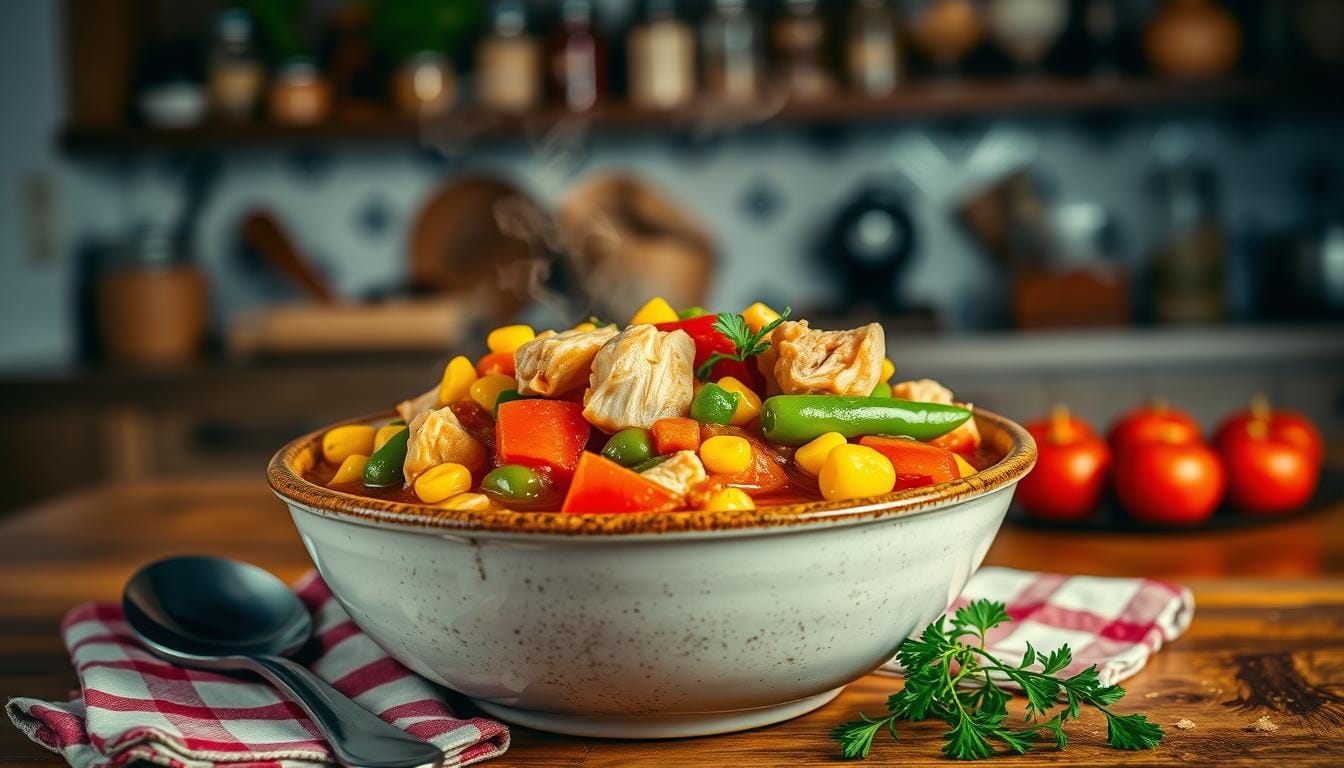
Easy Brunswick Stew Recipe for Your Next Family Lunch
Ever felt like some foods are like a warm hug on a cold night? Brunswick stew recipe is one of those dishes. It’s a mix of tender meats and fresh veggies, creating a bold, savory taste that everyone loves.
Making this iconic one-pot meal is easier than you think. With this easy recipe, you can get that perfect smoky and sweet taste at home. It’s the perfect way to make your family gatherings special with little effort.
Whether you’re an experienced cook or just starting out, this recipe is a sure hit. Get ready to wow your family with a delicious bowl of this classic dish.
Table of Contents
The History and Heritage of Southern Brunswick Stew
This hearty stew is a big deal in the American South. It’s a favorite at community gatherings and family dinners. But, where it came from is a topic of friendly debate. The story of southern brunswick stew is deeply rooted in regional culture.
Tracing the Origins of the Dish
There’s a big rivalry over this dish between Brunswick, Georgia, and Brunswick County, Virginia. Both places say they’re the true birthplace. Historically, it was cooked in large iron pots over open fires, using wild game.
Over time, the ingredients have changed to fit modern tastes. Early versions used squirrel, rabbit, or venison. Now, it’s mostly chicken and pork. This change reflects the shift in agriculture and easier access to ingredients.
Regional Variations Across the South
This dish has traveled and evolved, taking on local tastes and seasonal produce. The consistency and flavor vary by region. Yet, the core of brunswick stew remains a symbol of communal cooking.
Common regional differences include:
- The Tomato Base: Some areas like a thick tomato base, while others prefer a lighter broth.
- Vegetable Additions: Corn, lima beans, and okra are common, but the amounts vary by family.
- Spiciness Levels: Some regions add hot sauce or vinegar-based peppers for a tangy kick.
Understanding this heritage makes every spoonful more special. Whether you like it thick with meat or full of veggies, you’re part of a rich culinary tradition.
Essential Ingredients for an Authentic Brunswick Stew
To make a authentic brunswick stew, start with the right ingredients. The quality of your ingredients affects the flavor. Use fresh, traditional items to honor the dish’s history.
Selecting the Best Proteins
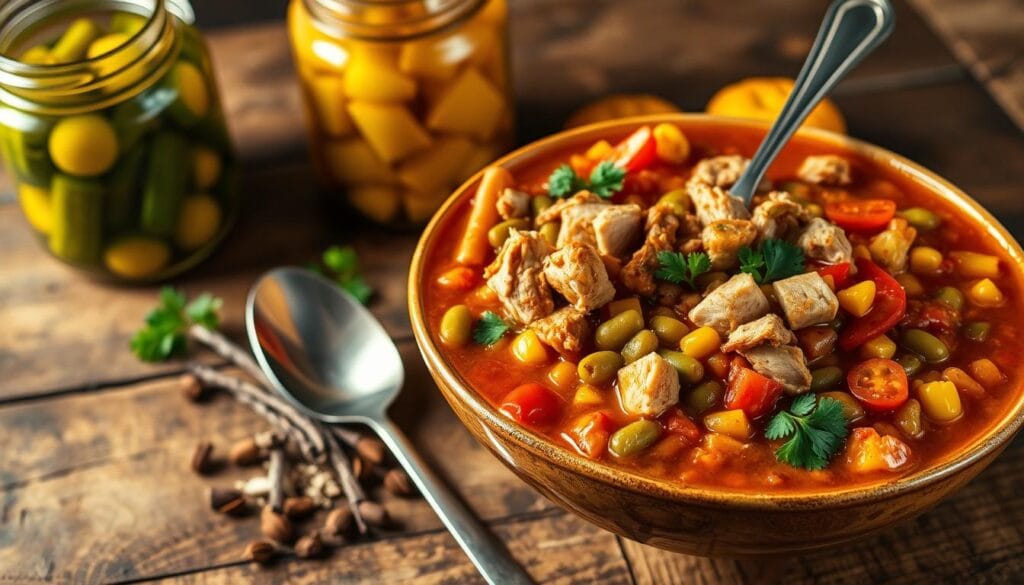
The meat is key to a great brunswick stew. A stewing hen gives a rich flavor. Add a smoked ham bone for a smoky taste.
These meats create a savory flavor. Choose bone-in cuts for more flavor. This makes the stew tender and full of protein.
Choosing the Right Vegetables and Aromatics
Vegetables add texture and sweetness. Butter beans and corn are essential. Onions and garlic create a strong aroma.
Add these at the right time. Aim for a thick stew. The beans and corn thicken it as it cooks.
The Importance of the Tomato Base
The tomato base gives the stew its tangy sweetness. Mix crushed tomatoes with barbecue sauce. This makes the stew unique.
Adjust the sauce and tomato ratio to your taste. A bit of vinegar or brown sugar can enhance the flavor. Making your own homemade brunswick stew lets you tailor it to your liking.
| Ingredient Category | Primary Examples | Role in Stew |
|---|---|---|
| Proteins | Stewing Hen, Ham Bone | Provides savory depth and body |
| Vegetables | Butter Beans, Corn | Adds texture and natural sweetness |
| Aromatics | Onions, Garlic | Builds the flavor foundation |
| Base Liquid | Tomatoes, BBQ Sauce | Creates tangy, signature finish |
Preparing Your Kitchen for the Perfect Stew
A successful batch of brunswick stew starts with good preparation. Having a clean workspace helps avoid stress and keeps your focus on the flavors. Organize your tools and ingredients early to make cooking smooth and fun.
Necessary Cooking Equipment
You’ll need a very large pot for this recipe. It should hold at least 15 quarts for all the ingredients. A heavy-bottomed pot is best because it cooks evenly, preventing scorching.
You’ll also need tongs and a long-handled wooden spoon for handling ingredients safely. A sharp chef’s knife and a large cutting board make chopping vegetables quick and precise.
Tips for Efficient Mise en Place
Mise en place means having everything ready before cooking. Chop vegetables and measure spices into small bowls before starting. If using pre-cooked meats, shred them ahead of time.
Organizing your workspace makes cooking easier. Prepping your ingredients lets you build the stew’s flavor with confidence. A clean kitchen helps you control the heat and timing.
| Equipment | Primary Function | Why It Matters |
|---|---|---|
| 15-Quart Pot | Cooking the stew | Prevents overflow and allows for even heat |
| Chef’s Knife | Chopping vegetables | Ensures uniform pieces for consistent texture |
| Wooden Spoon | Stirring ingredients | Protects the pot surface and mixes flavors |
| Prep Bowls | Holding ingredients | Keeps your workspace clean and organized |
Easy Brunswick Stew Recipe Step-by-Step Guide
Want to impress your guests with a memorable dinner? This guide will show you how to make the perfect brunswick stew. It’s all about patience and detail to get that deep, complex flavor. Follow these steps, and your meal will taste like it simmered for hours.
Preparing and Searing the Meats
First, dry your chicken and pork with paper towels for a perfect sear. Heat a heavy pot over medium-high with some oil. Brown the meat on all sides until it’s golden brown.
This step is key for a rich flavor. Don’t overcrowd the pan to avoid steaming instead of searing. Once browned, set the meat aside to prepare the aromatics.
Building the Flavor Foundation
To make an easy brunswick stew recipe, layer your ingredients carefully. Add diced onions, bell peppers, and celery to the pot, scraping up browned bits. Cook these until they’re soft and translucent, about eight minutes.
Then, add garlic, tomato paste, and spices. Let them toast for a minute until fragrant. This step enhances the dried herbs, making the stew rich. Pour in tomato base and broth, stirring well to mix everything together.
Simmering for Maximum Depth
Put the seared meat back in the pot and bring to a gentle boil. Then, lower the heat to low and cover the pot tightly. Let it simmer for about 1.5 hours until the meat is tender.
During simmering, the flavors will blend, making the stew thick and hearty. Check the pot to keep the liquid level right, adding water if needed. This slow cooking ensures every bite is full of flavor.
| Cooking Stage | Goal | Estimated Time |
|---|---|---|
| Searing | Develop deep flavor | 10-15 Minutes |
| Aromatics | Softening vegetables | 8-10 Minutes |
| Simmering | Tenderizing meat | 90 Minutes |
| Finishing | Balancing seasoning | 5 Minutes |
Mastering the Slow Cooker Brunswick Stew Recipe
Learning to use a slow cooker can save you time and still give you a tasty meal. It’s great for busy cooks. A slow cooker brunswick stew recipe is perfect for your dinner plans. It’s easy to use and always gives great results.
Adjusting Ratios for Slow Cooking
Switching to a slow cooker means you need to adjust the liquid. Since the lid doesn’t let liquid escape, you’ll have more than usual. Reduce your liquid by about one-third to get the right thick consistency.
To get the best flavor, sear your veggies in a pan first. This step adds a flavor foundation that’s hard to get without it. Then, add everything to your slow cooker and let it cook.
Benefits of Low and Slow Heat
The main benefit is the even, low heat. This low and slow cooking makes your brunswick stew tender and delicious. The long cooking time also blends the spices and tomato base, creating a rich flavor.
This method ensures your brunswick stew has a deep, complex taste. It’s perfect for a comforting, nutritious meal that’s ready when you are.
Tips for Achieving the Perfect Consistency
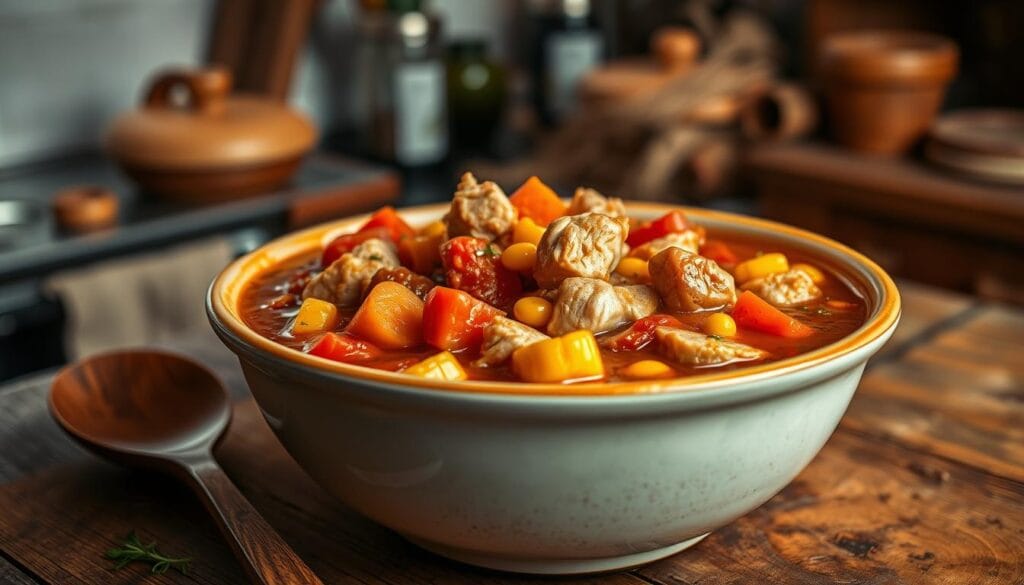
Getting the right texture in your dish is key. A great brunswick stew should be thick and coat your spoon. It should not be too thin or watery.
Thickening Techniques for Hearty Stews
If your stew is too thin, let it simmer uncovered for 10 to 15 minutes. This helps the moisture evaporate. It also makes the flavors richer, creating a hearty brunswick stew that sticks to your spoon.
If your stew gets too thick, add a bit of water or chicken stock. Do this slowly to avoid messing up the flavors. Consistency is truly a matter of personal preference. Adjust until it’s just right.
Balancing Sweetness and Acidity
A traditional brunswick stew balances sweet barbecue sauce with tangy tomatoes. If it’s too sweet, a bit of apple cider vinegar can help. It makes the flavors pop.
If it’s too acidic, a teaspoon of brown sugar or molasses can fix it. Taste your stew frequently as you adjust these elements. This ensures a balanced flavor that everyone will enjoy.
Serving Suggestions for Your Family Dinner
Turning a simple bowl of brunswick stew into a memorable meal is all about the sides. It’s not just a side dish anymore. It’s a main course in many homes today.
Whether it’s a side or the main event, the right sides make it better. Thoughtful additions balance the rich flavors of the stew.
Best Bread Pairings
The thick broth of brunswick stew calls for a good bread for dipping. Look for breads with a sturdy crumb to soak up the sauce.
- Blue Skillet Cornbread: Its slight sweetness pairs well with the tomatoes.
- Hard Cider Bread: Offers a rustic, tangy taste that matches the meat’s smokiness.
- Garlic Butter Toast: A toasted baguette adds a nice crunch.
Complementary Side Dishes
For a complete dinner, add sides that contrast the stew’s warmth. A vinegar-based coleslaw is a classic choice that balances the stew’s richness.
Try pickled vegetables or a fresh garden salad for a bright touch. These simple sides make your dinner satisfying and healthy.
| Side Dish | Flavor Profile | Best For |
|---|---|---|
| Vinegar Coleslaw | Tangy and Crisp | Cutting Richness |
| Sweet Cornbread | Sweet and Buttery | Soaking up Broth |
| Dill Pickles | Acidic and Salty | Palate Cleansing |
| Garden Salad | Fresh and Light | Adding Texture |
Storing and Reheating Your Homemade Brunswick Stew
Storing your favorite comfort food right is key to enjoying it all week. This recipe makes a big batch, so knowing how to handle leftovers is crucial. Follow these easy steps to keep your brunswick stew safe and tasty for days.
Proper Cooling and Refrigeration
Let your meal cool down before putting it in the fridge. Never put a hot pot in the fridge, as it can mess with other foods. Divide the brunswick stew into smaller containers to cool it faster.
Once it’s cooled, seal the containers tightly. You can store leftovers in the fridge for up to 4 days. Always check for signs of spoilage before reheating. Make sure your fridge is at 40°F or below for safety.
“Good food is the foundation of genuine happiness, and having a hearty meal ready in the fridge makes every busy evening feel like a special occasion.”
Freezing for Future Meals
If you have leftovers for more than a few days, freezing is a great choice. Portion your brunswick stew into freezer-safe bags or containers. This way, you can have a quick, healthy meal anytime you’re in a rush. Leave some space at the top of each container, as the liquid will expand while freezing.
To thaw your frozen stash, let it thaw in the fridge overnight. Reheat the brunswick stew slowly on the stovetop over low heat. Stir it occasionally to keep the texture right. This habit means you always have a comforting dinner ready in the freezer.
Conclusion
Learning to make perfect brunswick stew brings a piece of Southern history to your table. You now know how to mix flavors and textures in every bowl.
Your kitchen is set to make a meal that warms the soul. Whether you use a Lodge cast iron pot or a Crock-Pot, your guests will be impressed. This stew shows your dedication to cooking.
Get your ingredients ready and start cooking with confidence. Making homemade brunswick stew creates memories with your loved ones. Your journey into Southern cooking begins with this simple, hearty recipe.