Delicious Cornish Hen Recipe You Can Make Tonight
Ever wanted a fancy dinner but didn’t feel like cooking for hours? We’ve all been there, looking at the pantry after a long day. We wish for something truly special that’s easy to make.
This cornish hen recipe is perfect for a busy schedule. It looks fancy but is easy to make. You can turn a simple bird into a dish that tastes like it took all day to prepare.
Looking for an easy cornish hen recipe for a quick dinner or the best cornish hen recipe for a weekend? This guide has you covered. Let’s make your kitchen a five-star bistro tonight.
Table of Contents
Understanding the Cornish Game Hen
The Cornish game hen is a culinary gem that offers elegance in a small package. It may look like a miniature chicken, but it’s a distinct choice for anyone looking to master a sophisticated cornish game hen recipe. These birds must weigh between 1 and 2 pounds to meet the standard classification.
What Makes Cornish Hens Unique
The primary appeal of these birds lies in their exceptionally tender meat. They are harvested at a young age, making their texture far more delicate than a standard roasting chicken. This makes them an ideal candidate for a high-end cornish game hen recipe that requires quick, even cooking.
Their petite size allows for beautiful, single-serving presentations that impress guests at any dinner table. You will find that their small stature ensures that every guest receives a perfectly portioned, juicy meal. This level of control is exactly why professional chefs often favor them for intimate gatherings.
Nutritional Profile and Benefits
Beyond their flavor, these birds provide a lean source of high-quality protein. They are naturally low in fat, making them a healthy addition to your weekly meal rotation. When you prepare a well-balanced cornish game hen recipe, you gain essential nutrients like B vitamins and selenium.
Incorporating this poultry into your diet supports muscle maintenance without the excess calories found in larger cuts of meat. Because they are so versatile, you can easily pair them with roasted vegetables or light salads. Choosing this bird is a smart way to enjoy a gourmet experience while keeping your nutritional goals on track.
Selecting the Best Birds for Your Dinner
Your journey to a perfect dinner starts at the grocery store. Choosing the right bird is key for a great roasted cornish hen. Look for birds of similar size to cook evenly in your oven.
Fresh Versus Frozen Cornish Hens
Fresh birds are often preferred for their texture. They haven’t been frozen. But, high-quality frozen options are incredibly convenient and easy to find in the U.S. If you pick a frozen bird, thaw it in the fridge before cooking.
Check the packaging for damage or ice crystals. A well-packaged bird stays moist better. Always check the expiration date for the freshest roasted cornish hen.
Determining the Right Portion Size
Figuring out the right food amount is important. A good rule is half of a hen per person. This size is perfect for a dinner party.
Think about your guests’ appetites when planning. A roasted cornish hen as a single portion looks great on every plate. This way, everyone gets the same quality meal.
Essential Kitchen Tools for Roasting
To get professional results at home, you need the right tools. When making a baked cornish hen recipe, the right equipment makes everything easier. Quality gear ensures your poultry cooks evenly and safely every time.
Choosing the Right Roasting Pan
A heavy roasting pan is key in the kitchen. These pans spread heat evenly, preventing hot spots. This is crucial for that perfect golden-brown skin on your bird.
Stay away from thin, flimsy pans that can warp under heat. A sturdy pan gives a stable base and better air circulation. This simple change will greatly improve your baked cornish hen recipe.
Importance of a Reliable Meat Thermometer
Using a reliable meat thermometer is essential for safety. You can’t just look at the bird to see if it’s cooked. A digital probe thermometer gives you accurate readings in seconds, ensuring the meat is safe to eat.
A thermometer also helps you avoid overcooking. By taking the bird out at the right time, you keep the meat succulent and tender. Always have a sharp knife and a stable cutting board ready for prep work.
Preparing Your Cornish Hen for the Oven
Starting with a great meal means more than just cooking. Learning how to cook cornish hen shows that preparation is key. Taking care with your ingredients makes your dinner safe and tasty.
Thawing Techniques for Safety
Thawing frozen birds safely is crucial. The best way is to thaw them in the fridge for a day. This slow thaw keeps the meat safe.
Don’t thaw poultry at room temperature. If you’re short on time, thaw in cold water, changing it every thirty minutes. Always put food safety first for a healthy meal.
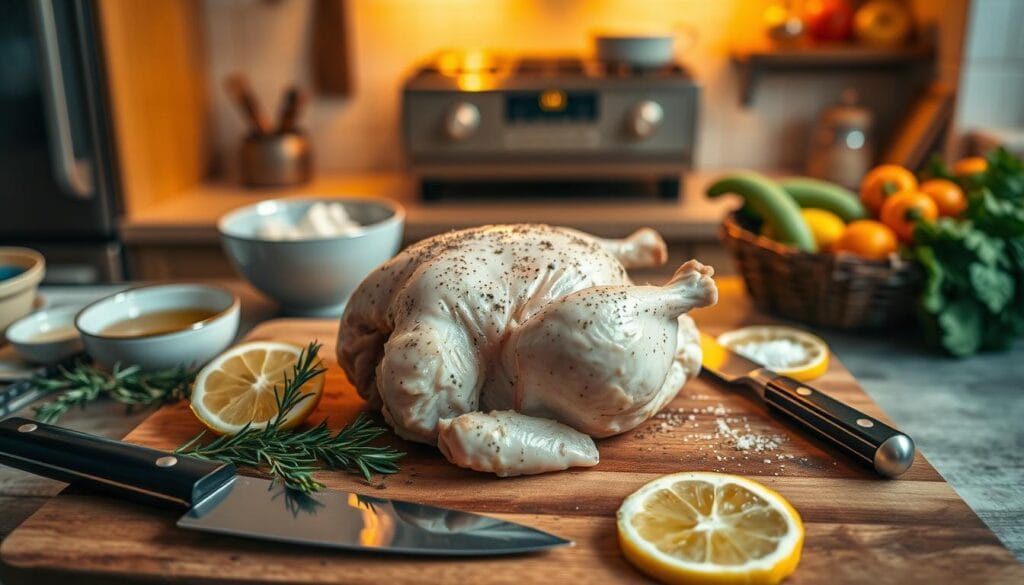
Cleaning and Patting Dry
After thawing, rinse the birds under cold water. Then, dry them well with paper towels. Removing excess moisture is important, but often missed.
Why Moisture Control Matters for Crispy Skin
Moisture stops your skin from getting crispy. Water on the skin makes the bird steam, not roast. Dry skin lets the fat render, giving you that coveted crispy texture.
Here’s a quick guide to help you choose how to cook your cornish hen:
| Preparation Method | Primary Benefit | Best For |
|---|---|---|
| Whole Roasting | Beautiful Presentation | Formal Dinners |
| Spatchcocking | Faster Cooking Time | Weeknight Meals |
| Halving | Even Seasoning | Individual Portions |
The Ultimate Cornish Hen Recipe Marinades and Rubs
Transform a simple bird into a gourmet masterpiece with the right marinade. The science of flavor helps elevate the meat’s natural richness. Choose bold, savory or bright, zesty flavors for a successful dinner.
Classic Herb Butter Infusions
Herb butter keeps the meat moist and adds a luxurious flavor. Herbs de Provence is a popular choice, mixing dried marjoram, rosemary, thyme, oregano, and lavender flowers into softened butter.
Slide this mixture under the skin of the breast for direct flavor penetration. This self-basting effect makes the skin fragrant and golden-brown.
Citrus and Garlic Flavor Profiles
Citrus and garlic brighten your dish. Lemon or orange juice tenderizes the meat, while garlic adds a savory base. Mix olive oil, minced garlic, lemon zest, and fresh juice for a marinade.
Marinate the bird for at least an hour for deep flavor penetration. This is ideal for spring or summer gatherings, offering a lighter, more vibrant taste.
Creating a Dry Rub for Maximum Crunch
A dry rub is great for texture. It draws out moisture for crispy skin in the oven. Start with kosher salt, black pepper, and smoked paprika.
Add brown sugar or dried chili flakes for sweetness or heat. Pat the skin dry before applying the rub for the perfect crunch. Massage the spices into the skin for a flavorful, textured crust.
Mastering the Cornish Hen Stuffing Recipe
Transform your roast dinner with a tasty cornish hen stuffing recipe. This recipe should match the bird’s flavor. Since these birds are small, the stuffing must cook at the same pace.
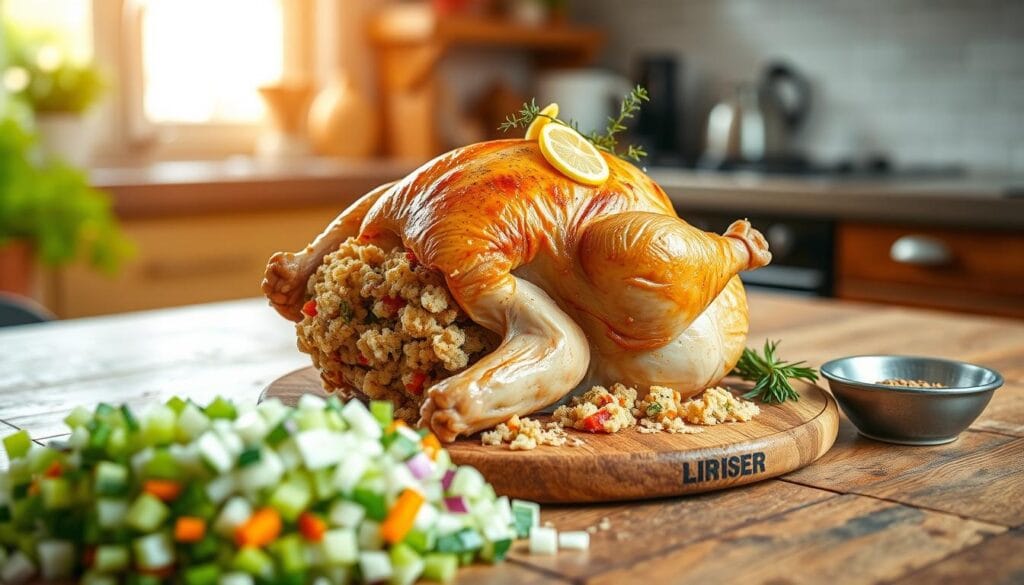
Choosing Ingredients That Cook Evenly
For the best taste, pick ingredients that soften quickly in the oven. Stay away from big chunks of veggies or thick meats. They might not cook fully before the hen is done.
Here are some tips for your cornish hen stuffing recipe:
- Use finely diced celery and onions to ensure they tenderize quickly.
- Opt for pre-toasted bread cubes to maintain texture without becoming mushy.
- Incorporate fresh herbs like sage or thyme for a bright, aromatic profile.
- Add a small amount of broth or melted butter to keep the mixture moist.
Techniques for Proper Stuffing
When filling the cavity, avoid packing the mixture too tightly. The stuffing needs room to expand as it absorbs the juices from the hen.
Don’t press the ingredients too hard. This can make the center cold or undercooked. Gently spoon the mixture into the cavity, leaving a little space at the opening for heat to circulate.
Safety Guidelines for Internal Temperature
Safety is key in any cornish hen stuffing recipe. The stuffing’s center must reach at least 165°F to avoid foodborne illness.
Always check with a reliable meat thermometer. Insert the probe into the thickest part of the stuffing. If it’s lower than 165°F, keep roasting until it’s fully cooked.
Step-by-Step Guide on How to Cook Cornish Hen
Starting with these essential roasting steps can make your meal as good as a restaurant’s. Whether you’re new to cooking or have experience, following a clear guide ensures your cornish hen recipe is perfect every time. By controlling heat and moisture, you get crispy skin and juicy meat.
Setting the Ideal Oven Temperature
To start your easy cornish hen recipe, get your oven ready. Heat it to 450ºF for crispy skin and quick browning.
Put your roasting rack in the oven’s middle. This ensures even heat, preventing burnt edges or uneven cooking.
Basting Techniques for Succulent Meat
Mastering how to cook cornish hen is more than just setting the oven. Basting is key to add flavor and keep the breast meat moist during roasting.
Use a bulb baster or spoon to collect pan drippings. Drizzle these juices over the birds every 15 to 20 minutes. This makes the hen look and taste amazing.
Monitoring the Cornish Hen Cooking Time
Timing is crucial when making a baked cornish hen recipe. The bird’s size can vary, but always use a meat thermometer for safety and quality.
Put the thermometer in the thickest part of the thigh, avoiding the bone. The meat should reach 165ºF for it to be fully cooked and safe.
| Bird Weight | Estimated Cooking Time | Internal Temperature |
|---|---|---|
| 1.0 – 1.2 lbs | 35 – 45 minutes | 165ºF |
| 1.3 – 1.5 lbs | 45 – 55 minutes | 165ºF |
| 1.6+ lbs | 55 – 65 minutes | 165ºF |
The cornish hen cooking time can vary with different ovens. Start checking for doneness about five minutes before the estimated time. This helps avoid overcooking.
Common Mistakes to Avoid When Roasting
Getting the perfect roast is more than just a good recipe. It’s about paying attention to the little things. Even seasoned cooks can make mistakes that ruin the dish. Knowing these common errors can help your roasted cornish hen stay juicy, flavorful, and look great.
Preventing Dry or Overcooked Meat
Small poultry like Cornish hens can dry out quickly if cooked too long. Always use a meat thermometer to check the internal temperature. Don’t rely on the clock alone.
Take the bird out of the oven as soon as it reaches a safe temperature. Overcooking turns a tender roasted cornish hen into a dry, tough mess.
Ensuring Even Browning
Crowding the roasting pan is a big mistake. It stops air from circulating, leading to steaming instead of roasting. This results in pale, soggy skin instead of a golden crust.
Make sure each bird has enough space in the pan. If cooking multiple hens, use a bigger pan or roast them in batches. This helps get that perfectly crispy skin.
Resting the Meat Before Serving
Many cooks carve their poultry right after it comes out of the oven. This lets the juices run out instead of staying inside the meat.
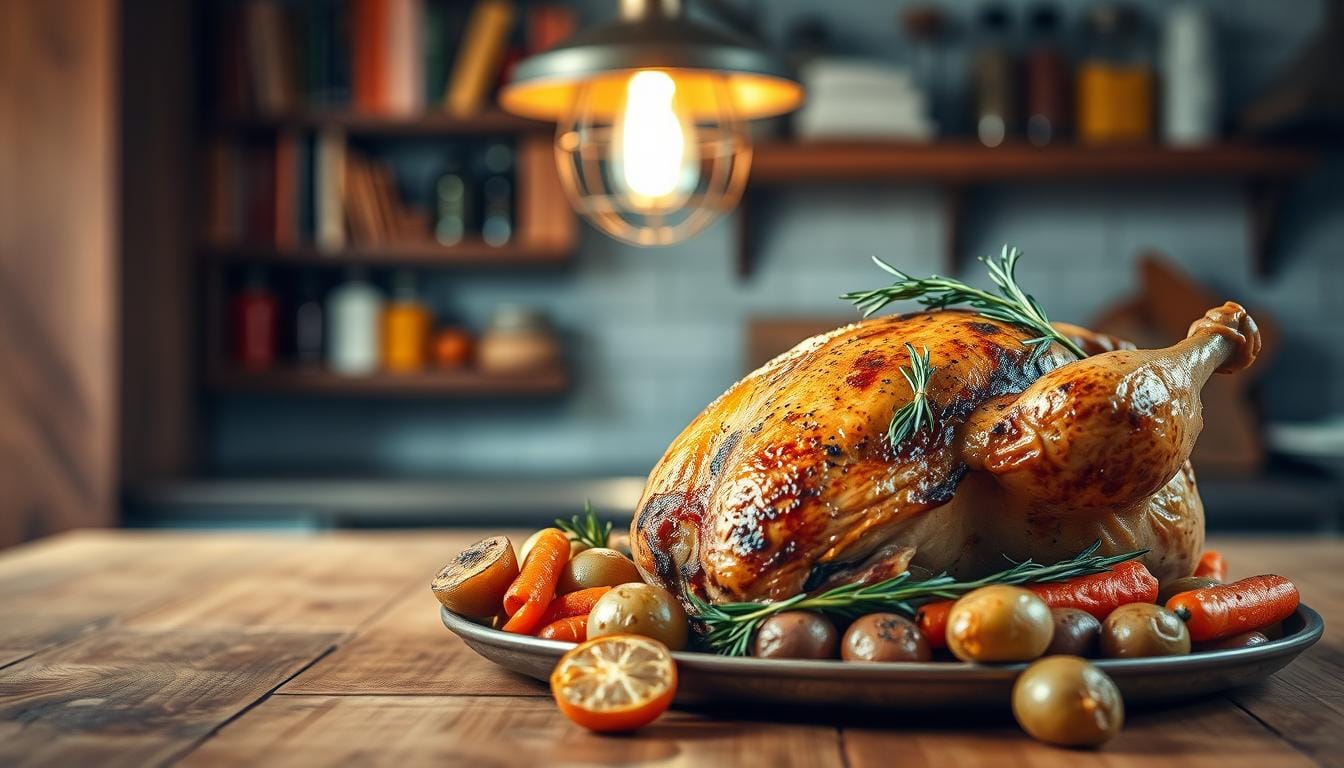
Always take the hens out of the oven and cover them with foil. Let them rest for at least ten minutes. This keeps your roasted cornish hen moist and tender when you serve it.
Creative Side Dishes to Complement Your Meal
A memorable meal is all about how well the side dishes match the main course. When you serve a Cornish hen, aim to balance its richness with sides that offer different textures and flavors. Choosing the right sides can turn a simple dinner into a fancy event.
Roasted Root Vegetables and Potatoes
Hearty veggies are a great choice because they soak up the juices from the roasting pan. Try roasting carrots, parsnips, or sweet potatoes with honey and thyme. These earthy tastes make a robust foundation for the delicate hen.
For something more traditional, consider these options:
- Creamy mashed potatoes with butter and chives.
- Fluffy buttered rice with fresh parsley or lemon zest.
- Roasted Brussels sprouts in balsamic glaze for a tangy touch.
Fresh Seasonal Salads and Greens
A light and crisp salad can balance the savory hen. A bed of arugula or mixed greens with a bright vinaigrette adds a refreshing element. Add sliced apples, toasted walnuts, or pomegranate seeds for crunch.
Steamed green beans or sautéed asparagus with garlic are also great. These greens add color and a clean finish. Simple preparation lets the veggies’ natural flavors shine.
Pairing Wines and Beverages
The right drink can make your meal even better. For wine, a light-bodied Pinot Noir or crisp Chardonnay pairs well with Cornish hen. If you prefer not to drink, try sparkling water with citrus or a chilled herbal iced tea.
| Side Dish Type | Recommended Pairing | Flavor Profile |
|---|---|---|
| Roasted Vegetables | Pinot Noir | Earthy and Light |
| Creamy Potatoes | Chardonnay | Buttery and Smooth |
| Fresh Green Salad | Sauvignon Blanc | Crisp and Acidic |
The best pairing is what you enjoy most. Whether it’s a bold red wine or lemonade, make sure it complements your meal. Try different combinations to find your signature style for hosting.
Conclusion
Learning to cook Cornish hen is a skill that adds class to any meal. You now know how to make these small birds the stars of your next dinner party.
By practicing these roasting methods, you’ll get tender and tasty results every time. You can also try out new herbs and sides to show off your cooking style.
Your kitchen is where you can get better at cooking and try out new flavors. Share your best dishes with loved ones to make any meal special. Enjoy making delicious food tonight.