Discover the Best Rasta Pasta Recipe for Your Table
Ever dream of a meal that feels like a tropical getaway? There is something truly magical about cooking up bold, Caribbean flavors at home after a long day.
This dish is ideal for quick weeknight meals. It’s fast and delicious, ready in just 30 minutes. This leaves you more time to enjoy with your loved ones.
This rasta pasta recipe mixes tender proteins with vibrant spices. It’s a memorable meal that’s perfect for a quick, tasty escape. Follow this easy recipe to turn your dinner into a tropical feast.
Table of Contents
The Origins and Cultural Significance of Jamaican Rasta Pasta
Jamaican rasta pasta is more than food; it’s a way of life. It comes from Jamaica’s Rastafari culture, mixing bold tastes with a love for nature. Learning about its roots helps you understand the spirit in every bite.
Understanding the Ital Philosophy in Caribbean Cooking
The Ital philosophy is at the heart of this cooking tradition. It’s about eating natural, unprocessed foods. It means eating foods straight from the earth, without artificial stuff.
Making jamaican rasta pasta is a way to follow these principles. The dish uses fresh, colorful veggies, showing the Rastafari movement’s colors. Here are key parts of the Ital way:
- Freshness: Choosing local, seasonal foods.
- Purity: Staying away from processed foods to keep food’s natural energy.
- Vibrancy: Using a variety of peppers to show cultural identity.
Why This Dish Became a Global Comfort Food Staple
This recipe grew from a local dish to a global favorite. Its creamy and spicy mix won hearts worldwide. It’s loved for its hearty, satisfying taste.
Jamaican rasta pasta is flexible, fitting into many kitchens while staying true to its roots. It connects us to Caribbean culture, loved for its exotic yet comforting feel.
Essential Ingredients for an Authentic Rasta Pasta Recipe
Choosing the right ingredients is key to making your rasta pasta recipe taste like it’s from a restaurant. Use fresh, vibrant ingredients to bring the authentic Caribbean taste to your dish. This way, your pasta will look as good as it tastes.
Selecting the Right Pasta Shapes for Creamy Sauces
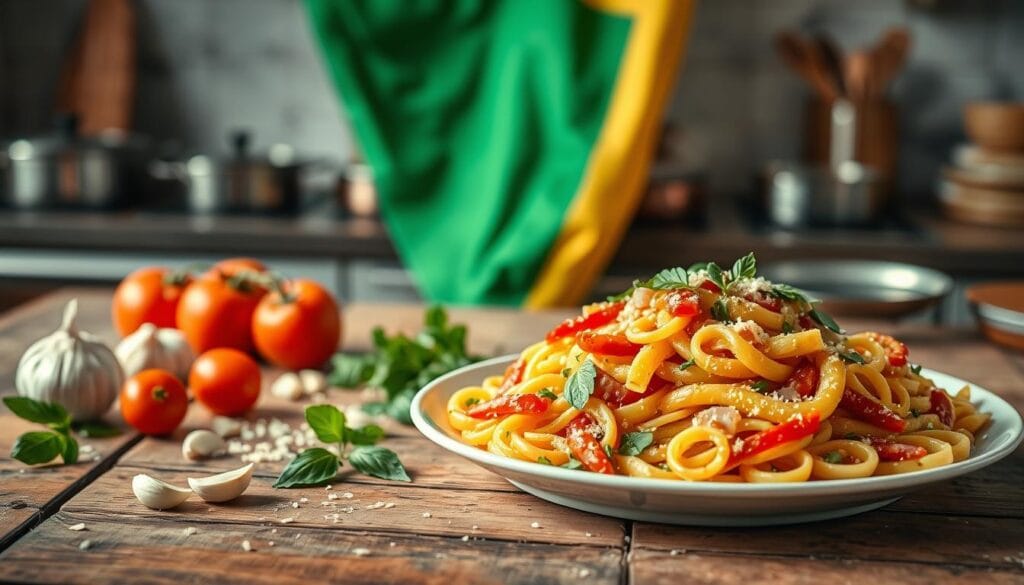
The right pasta shape is crucial for a great rasta pasta recipe. Choose shapes like penne, rigatoni, or fusilli. These shapes hold the creamy sauce well, making each bite full of flavor.
Stay away from thin noodles like spaghetti. They can’t handle the thick, spiced cream sauce. The right pasta gives your dish a nice texture that complements the crunchy veggies.
The Role of Bell Peppers in Achieving the Iconic Rasta Colors
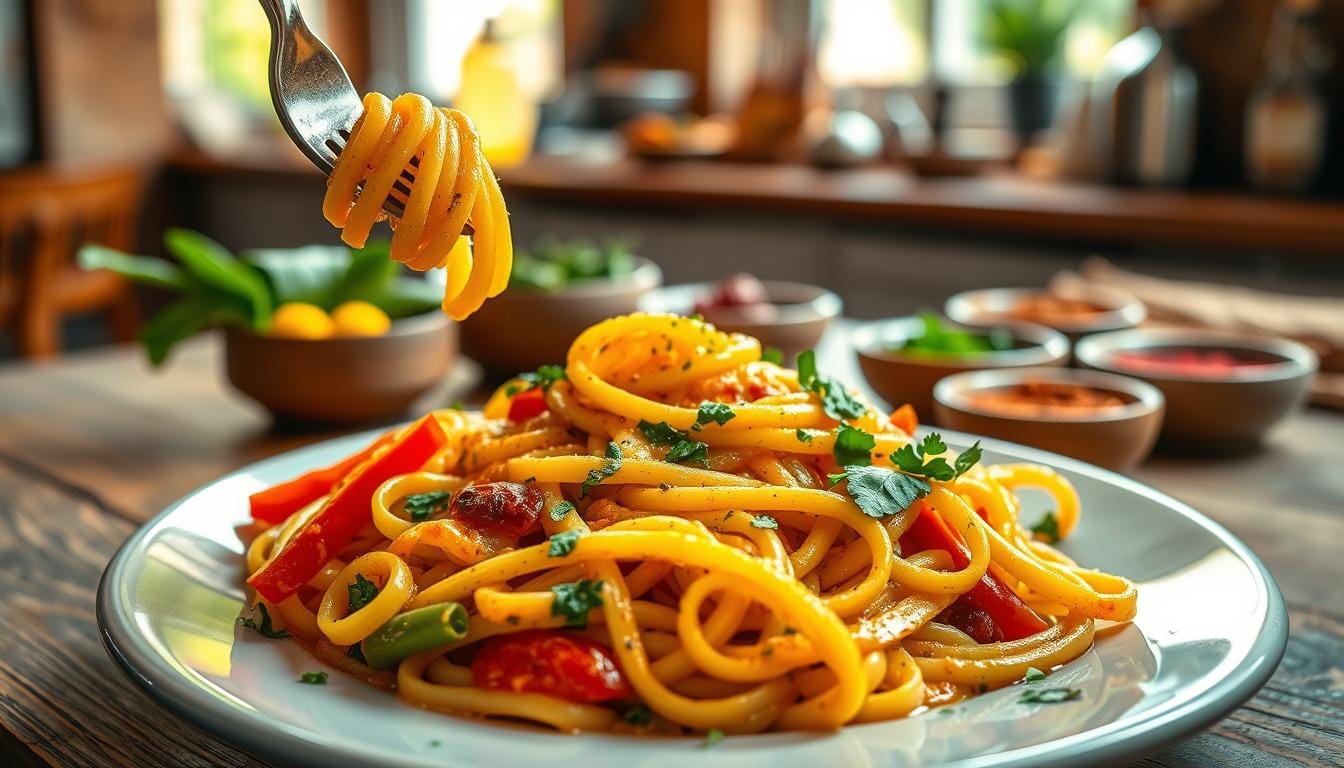
The dish’s beauty comes from the red, green, and yellow bell peppers. These colors match the Rastafarian flag, making them essential for an authentic rasta pasta recipe. They add sweetness and a crunchy texture that balances the creamy sauce.
Make sure to cut your peppers into even strips. This helps them cook evenly and keeps them crunchy. A good balance of texture is key for a great mouthfeel.
Choosing High-Quality Aromatics and Spices
A memorable rasta pasta recipe starts with fresh garlic, onions, and scallions. These build a strong, savory base. They’re the heart of Caribbean comfort food.
For spices, use high-quality jerk seasoning. It adds a rich, earthy flavor that brings the dish together. Always check your spices for freshness to keep your meal vibrant.
| Ingredient Category | Recommended Choice | Primary Function |
|---|---|---|
| Pasta | Penne or Rigatoni | Sauce retention |
| Vegetables | Tri-color Bell Peppers | Visuals and crunch |
| Aromatics | Garlic and Scallions | Flavor foundation |
| Spices | Jerk Seasoning Blend | Heat and depth |
Mastering the Creamy Sauce Base
Learning to make a creamy sauce base can take your cooking to the next level. A good sauce holds everything together in a creamy rasta pasta. It mixes the colors and flavors of vegetables and spices into one dish. Getting the right texture needs patience and knowing how fats react when heated.
Balancing Heavy Cream and Coconut Milk for Texture
The dish’s richness comes from mixing heavy cream and coconut milk. Heavy cream makes it smooth, while coconut milk adds sweetness and a tropical flavor. You can use half-and-half or coconut cream for a creamier dish.
“The secret to a perfect sauce is not just the ingredients, but the harmony between them; when the fat and liquid emulsify, the dish transforms into something truly special.”
Incorporating Parmesan and Nutritional Yeast for Depth
Adding cheese and umami-rich ingredients like nutritional yeast gives your creamy rasta pasta a savory taste. Parmesan cheese adds a salty, nutty flavor as it melts. Nutritional yeast is a great dairy-free option for a cheesy taste.
| Base Ingredient | Texture Profile | Flavor Impact |
|---|---|---|
| Heavy Cream | Very Thick | Neutral/Rich |
| Coconut Milk | Medium | Sweet/Tropical |
| Half-and-Half | Light | Mild/Creamy |
Tips for Preventing Sauce Separation During Cooking
One big challenge in making creamy rasta pasta is stopping the sauce from breaking. Always cook at low to medium heat to avoid separating fats and liquids. Adding a bit of pasta water can help keep the sauce smooth and shiny.
Step-by-Step Guide to Preparing Traditional Rasta Pasta
Learning to make traditional rasta pasta needs focus and timing. By following a clear order, you make sure each part of your dish is at its best. This way, flavors and textures come together perfectly.
Preparing Your Vegetables and Proteins
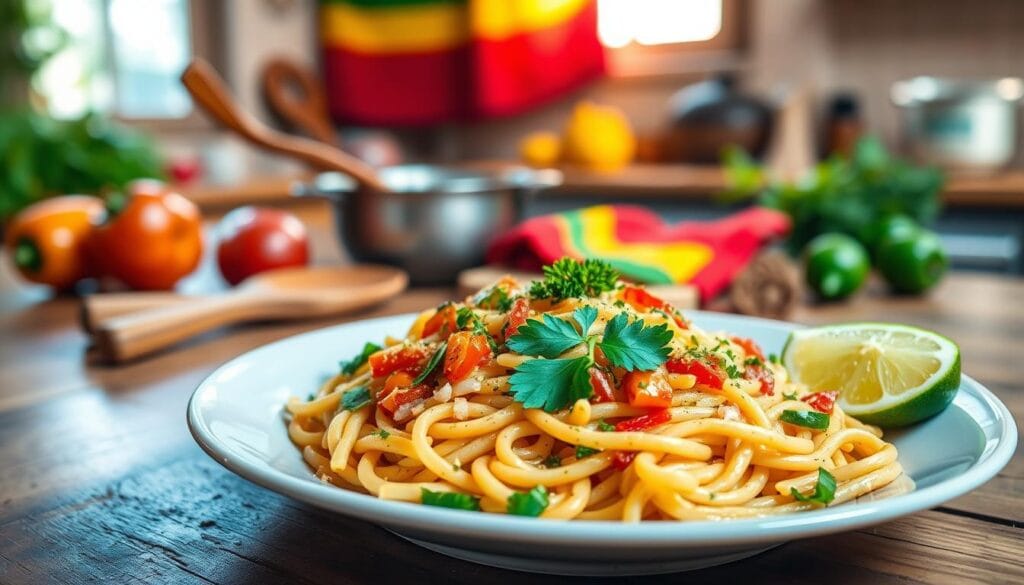
First, wash and cut your bell peppers into even strips for even cooking. Dice your onions and mince garlic finely to release their oils. Clean and dry your proteins like chicken or shrimp before seasoning.
Consistency is key when chopping. Uniform pieces help vegetables cook evenly. This prevents some from getting too soft while others stay raw.
Sautéing Techniques for Maximum Flavor Extraction
Heat a heavy skillet over medium with olive oil or butter. Start with onions and garlic until they’re translucent and smell great. Then, add bell peppers and cook until they’re tender but still crisp.
For proteins, sear them in the same pan. This captures the browned bits that add flavor to your rasta pasta recipe. Keep the heat steady to avoid burning the spices or garlic.
Combining Pasta and Sauce for the Perfect Consistency
Boil your pasta until it’s al dente. Before draining, save some pasta water. This water helps bind your sauce later. Once the pasta is done, toss it in your sauce while it’s still warm.
Stir gently to coat the pasta evenly. Add pasta water as needed for a silky finish. This step makes sure the sauce sticks well to the noodles, giving a great taste.
| Ingredient Type | Preparation Method | Cooking Heat |
|---|---|---|
| Bell Peppers | Uniform Slicing | Medium-High |
| Aromatics | Fine Mincing | Medium |
| Proteins | Sear and Brown | High |
| Pasta | Boil Al Dente | High |
Exploring Variations for Every Dietary Preference
This classic Caribbean meal is surprisingly versatile in your kitchen. It uses bold aromatics and colorful vegetables. This makes it a great base for your creativity.
Crafting a Hearty Vegetarian Rasta Pasta
For a vegetarian rasta pasta, focus on a variety of vegetables. Use red, yellow, and green bell peppers. This makes the dish look great and adds a nice crunch.
Pro tip: Sauté the vegetables in olive oil with garlic and scallions. This creates a deep flavor. The vegetarian pasta gets its savory taste from these ingredients, without needing meat.
Adapting the Recipe for a Plant-Based Rasta Pasta
Switching to a plant-based rasta pasta is easy. Replace dairy with full-fat coconut milk. This adds a rich, creamy texture that goes well with Caribbean spices.
“The beauty of plant-based cooking lies in the ability to substitute traditional fats with coconut milk, which actually enhances the tropical profile of the dish.”
To get that cheesy taste in your plant-based pasta, use nutritional yeast or vegan parmesan. These add a deep umami flavor that keeps the sauce balanced and tasty.
Adding Proteins Like Jerk Chicken or Shrimp
If you like animal proteins, this dish is perfect for them. Try it with sautéed shrimp for a light yet indulgent twist.
Here are some protein options to customize your meal:
- Jerk Chicken: Grilled or pan-seared strips add a smoky, spicy kick.
- Sautéed Shrimp: Provides a delicate sweetness that pairs perfectly with coconut milk.
- Smoked Tofu: A great way to add texture if you want a plant-based protein boost.
Cook your proteins separately before adding them to the sauce. This keeps your chicken or shrimp tender and prevents overcooking while the pasta soaks up the sauce.
Adjusting the Heat Levels for Spicy Rasta Pasta
Making the perfect spicy rasta pasta is all about finding the right mix of heat and flavor. The dish’s bright colors are great, but it’s the spice that really brings the Caribbean vibe. You can adjust the heat to make sure everyone enjoys their meal.
Working with Scotch Bonnet Peppers Safely
Scotch Bonnet peppers add a fruity heat that’s key to the dish. They’re incredibly potent, so handle them carefully to avoid skin irritation. Always wear food-safe gloves when cutting them and avoid touching your eyes or face.
To tone down the heat, remove the seeds and the white membrane inside the pepper. These parts have the most capsaicin. By controlling how much pepper you use, you can keep the flavor without overwhelming your spicy rasta pasta.
Using Jerk Seasoning Blends to Control Spice Intensity
Jerk seasoning is crucial for this dish, but store-bought blends can vary in heat. If you want a milder taste, make your own blend. Mix salt, black pepper, dried thyme, allspice, brown sugar, garlic powder, and a pinch of cinnamon.
By adjusting the spice ratios, you can reduce the heat while keeping the aromatic depth. Adding more brown sugar or garlic powder can soften the sharpness of the allspice and pepper. This lets you control the flavor of your spicy rasta pasta exactly.
Balancing Heat with Sweet and Savory Elements
If your sauce is too spicy, you can balance it with a few tweaks. Adding more coconut milk or heavy cream can coat your tongue and reduce the heat. These fats help smooth out the pepper’s sharpness.
Introducing sweetness with sautéed bell peppers or a bit more brown sugar can also help. These add to the dish’s savory flavors and create a pleasant contrast to the spice. With these tips, your spicy rasta pasta will always be just right.
Pro Tips for Elevating Your Caribbean Rasta Pasta
Creating a perfect Caribbean rasta pasta is more than just a recipe. A few expert tips can make your dish taste like it’s from a restaurant. This is true every time you cook it.
The Importance of Pasta Water in Sauce Emulsification
Using the starchy water from boiling noodles is key to better jamaican rasta pasta. This water helps the sauce stick to the pasta, not slide off.
To make it creamier, save 1/2 cup of pasta water before draining. Mix this with 1/4 cup of heavy cream. This creates a smooth, even texture that covers every bite perfectly.
Garnishing for Visual Appeal and Freshness
Presentation is crucial for a great dining experience. A colorful dish like this benefits from a thoughtful garnish. It adds color and fresh flavor.
Top your dish with chopped scallions, fresh parsley, or toasted coconut flakes. These small touches add a bright contrast to the rich sauce. They make your meal look as delicious as it tastes.
Storing and Reheating Leftovers Without Losing Creaminess
Creamy sauces can thicken or separate in the fridge. To keep leftovers fresh, store the pasta in an airtight container. Add a little water or milk before reheating.
Warm the dish on low heat, stirring constantly. This prevents the sauce from breaking. It keeps your meal luxuriously creamy even on the second day.
Common Mistakes to Avoid When Making Easy Rasta Pasta
Making a great meal at home is easy if you avoid common mistakes. Even with a good recipe, small errors can change your dish’s texture and taste. Paying attention to your cooking technique ensures your easy rasta pasta is perfect every time.
Overcooking Your Vegetables and Pasta
Many home cooks overcook pasta and veggies. You want bell peppers to still have a bit of crunch. This contrast is key. Also, aim for al dente pasta, which will soften a bit in the sauce.
Under-seasoning the Cream Base
A creamy rasta pasta needs the right spice balance. If the sauce isn’t seasoned well, it might taste bland. Taste and adjust the seasoning as you go, adding salt, pepper, and jerk seasoning to taste.
Ignoring the Importance of Fresh Herbs
Fresh herbs are crucial for flavor. Adding fresh thyme or parsley at the end gives a bright, fresh taste. Freshness makes a big difference, turning a simple meal into a Caribbean feast.
Don’t worry about leftovers. They can last 3-4 days in the fridge and reheat well. Just add a bit of water or milk to keep it creamy.
| Common Mistake | Resulting Issue | Simple Fix |
|---|---|---|
| Overcooking Pasta | Mushy texture | Cook 1 minute less than package |
| Weak Seasoning | Bland flavor | Layer spices during sauce prep |
| Skipping Herbs | Dull presentation | Add fresh parsley before serving |
| High Heat | Sauce separation | Use low heat for the cream base |
Conclusion
Learning to make this colorful dish turns your kitchen into a place of real island taste. You now know how to mix creamy textures with strong spices. This makes a meal that everyone will love.
This easy rasta pasta is a great base for your cooking ideas. You can change the protein to shrimp or jerk chicken, depending on what you like. You can also adjust the spice level with fresh Scotch Bonnet peppers to your taste.
Whether you cook on the stovetop or use an Instant Pot, it’s easy and fun. Mixing fresh herbs with good pasta makes your dish taste like it’s from a restaurant.
Make this easy rasta pasta a regular part of your meals. Share your own versions with friends and family to share the joy of Caribbean cooking. Starting your cooking journey is as simple as following these easy, tasty steps.